Pages

Friday, 6 May 2011

Normanby Top DX Trip

My first 'proper' DX trip of the year took place today, concentrating on the 2m amateur band. 

This time I was not alone. Accompanying me were Jane, M6VVP (my other half) and Victor MM6ECO, a friend who was on holiday from Scotland. evening. 

It was good to meet Victor for the first time and I know he also enjoyed the visit to the Friskney & East Lincolnshire Communications Club on the previous Tuesday. We were also privaleged to be allowed to use the club callsign "MX0LFC/P" for our trip. Click here to visit FELCC 

So, three intrepid DXers travelled from Skegness to the highest point in Lincolnshire: Normanby Top - the highest part of the Lincolnshire Wolds at 551ft (168m) above sea level. 

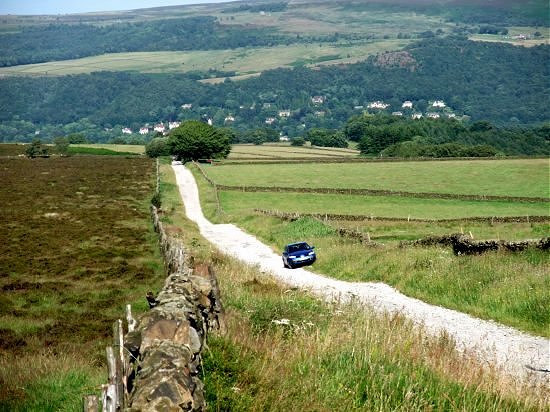
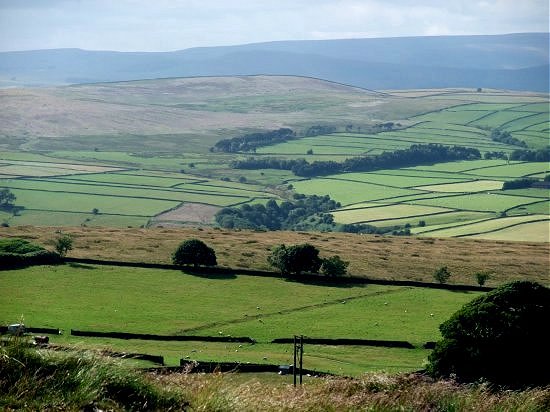
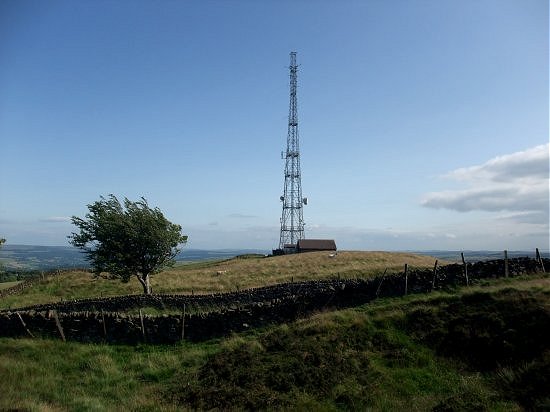
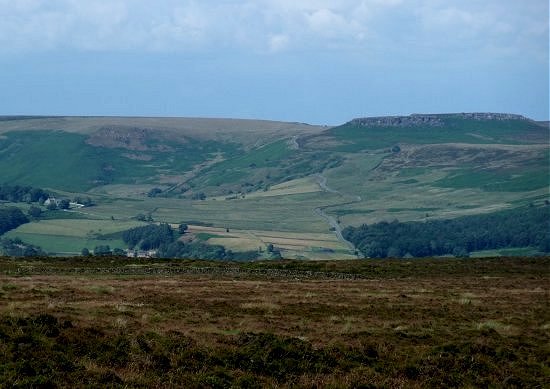
Looking west from Normanby Top

"Wolds Top", as it was formerly known, lies approximately five miles north of the town of Market Rasen and approximately 20 miles north-east of Lincoln. The summit is marked with an Ordnance Survey triangulation station, which was erected in July 1999 as part of the Ordnance Survey national GPS system. This hill is also home to a National Air Traffic Control station - the giant 'golf ball' at the top. 
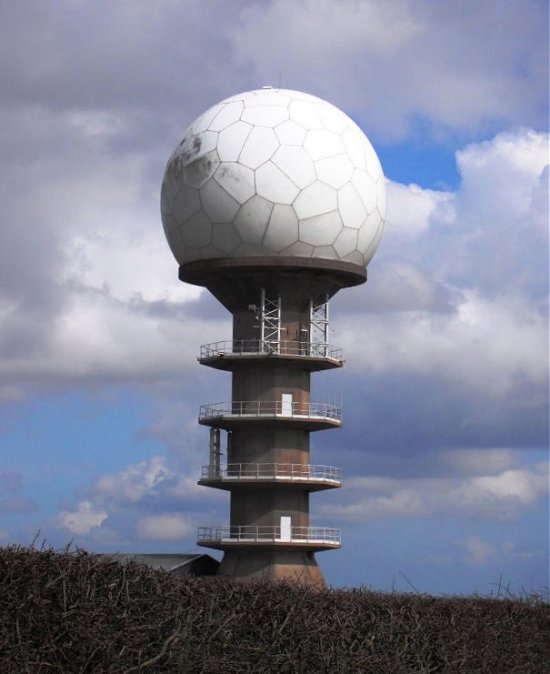

National Air Traffic Colntrol, Normanby Top

Although this hill is far from being of mountainous proportions, it enjoys stunning views over all points of Lincolnshire and beyond. The Humber Bridge can also be seen on a clear day. Sadly, our visit coincided with warm, humid weather - ideal in some ways, but the humidity was apparent in the air, making the distance quite hazy. Indeed we were lucky to avoid some heavy downpours which were apparent to the west and north of us. 

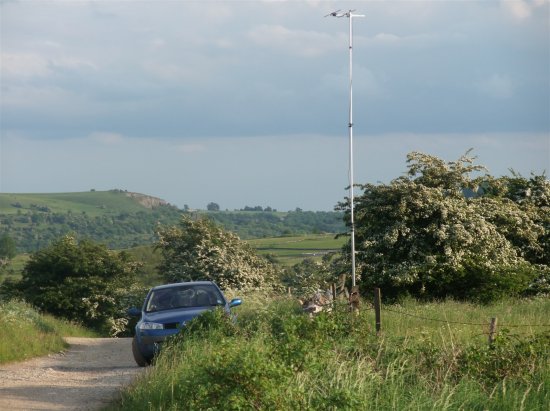
Equipment in use was an Icom IC7000 mobile transceiver and a Cushcraft VRX2 colinear. The colinear was approximately 15 feet above the ground. 
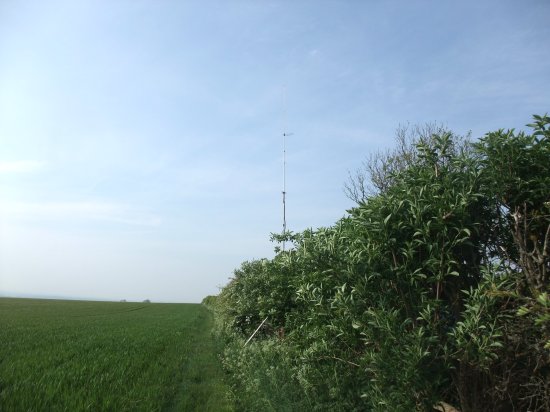
Cushcraft VRX2

The log below includes most of the QSOs. A few additional ones were lost due to QSB, etc. Conditions were below average so no exceptional distances were achieved, our furthest contact being from Oldbury in the West Midlands. We enjoyed four hours of non-stop DXing and good old nattering, each of us taking it in turns.

Thank you to all those who responded to our calls. We look forward to working you again in the future. 

73 

John 
G1VVP 

 Call    Name QTH   In Out Power
 M1AIU/P Gareth, Bourne, Lincs  5/1 5/5
 G4FPO Ken, Selby, N Yorks  5/1 5/3
 G0MZZ Tony, Leeds   5/1 5/1
 M1AKT/M Dave, Barnsley, S Yorks 5/3 5/5
 2E0WJC Bill, Pudsey, Leeds  5/5 5/9
 2E0GLE Graham, Grantham, Lincs  5/1 5/2
 M0GUU Arthur, Sleaford, Lincs  5/1 5/1
 G7CNM/P Dave, Lincoln   5/1 5/1
 G0CEG Peter, Lincoln   5/9 5/9 +
 G0UAN Nige, Winston, N Lincs 5/9 5/9 +10
 G0IOR John, Scartho, NE Lincs 5/7 "+"
 G7ZRT Ron, Boston   5/6 5/9 +50
 2E0EEY Chris, Leeds   5/2 5/9
 G4NPS Jim, Grimsby, NE Lincs 5/7 ?
 G1HCI Richard, Grimsby, NE Lincs 5/7 ?
 M3LFY Terry, Bawtry, S Yorks 57 ? ?
 G0JJR David, Sheffield  5/9 5/9 +
 G6LCS John, Tideswell, Derbys 5/1 ? 2.5W
 G6LCS John, Tideswell, Derbys 5/4 ? 25W
 M3NRQ/P Paul, Sheffield  5/1 ?
 M0TCP Keith, Oldbury, W Mids  5/1 5/1
 MR0MFP Chris, Sutton On Sea, Lincs 5/1 5/6
 M0KIS Alan, Sleaford, Lincs  5/6 ?
 M0ODV Rob, Hull   5/4 5/7
 M3VXT Craig, Chesterfield, Derbys 5/5 5/7
 G6ZBO Mike, Nottingham  5/1 5/9
 G1PPP Jim, East Stockwith, Lincs 5/9 ?

Monday, 18 October 2010

Moving To The East Coast

After living in the dreary North Midlands all my life, I finally managed to escape to the coast. I have never been a fan of the Midlands and have always wanted to live by the sea. 

In 2009 I met Jane, who also had the same long-standing ambition. We decided that the time was right to realise our dreams. 

There are some things we will miss, not least being so close to the Derbyshire Dales and the beautiful Peak District. It is also a shame to leave old friends behind, but the distance from Skegness to Nottinghamshire has not been so restrictive that our friends haven't come and stayed with us. The North Midlands has often been considered one of the friendliest places in the UK - a fact I wholeheartedly agree with. 

One thing is for certain, radio reception possibilities should dramatically increase by the sea. The east coast will be a perfect location for many forms of DX, especially on the FM broadcast band as it's almost empty! So I plan to continue my FM and MW broadcast DX hobby in earnest. Jane and I are looking forward to our new life by the sea and experiencing a new world of radio.


January 2011 Update

It's now been four months since our move and we are feeling very settled in our new home! 

Moving to the east coast has been one of the best things we did: The air quality is so much cleaner for starters. You can actually see the stars and the Milky Way in the night sky; We live within walking distance of the beach; We have some of the best beaches in the world too; We are a stone's throw from the Lincolnshire Wolds - a kind of mini Peak Ditrict and designated an "AONB" (Area of Outstanding Natural Beauty); We have peace and quiet, living right in the edge of town, overlooking fields for miles;  We live close to some charming rural communities and country pubs (which serve a wealth of real ales) and we have several nature reserves close by, all natural habitats for some quite exotic wildlife, not to mention plenty of secluded areas suitable for beverage aerials! 

The weather has been far from what we expected too. Thankfully, we missed the severe winter chill which was experienced further inland and only had a few inches of snow which lasted for two to three weeks. It's the first time we have ever seen snow-covered beaches! 
The locals tell us it is almost unheard of to have lying snow on this coast as it usually melts the moment it lands. We also discovered that the east coast is recognised as being the sunniest part of England. After living here for only four months we can only agree with this. It is usually sunny, with cloudless skies, even when the weather forecast predicts cloud! Even on the colder days of mid-winter you can actually feel the warmth of the sun. beating down on you, something I have never noticed inland. 


The option to move to Skegness came quite unexpectedly. Personally, I had never considered Skegness as a town in which I wanted to live. My childhood memories of visits to this area were of endless amusement arcades with bingo callers, lots of noise, bright lights, overcrowded bars and fairground rides, but since living here and getting to know the place properly, I find it extremely pleasant and a hundred times better than my old location in Nottinghamshire. It has it's tacky side, but so do many UK holiday resorts. I actually find it a very pleasant, attractive town with plenty of open spaces and gardens. The surrounding countryside is beautiful. Just one thing, however, we are always amazed by the number of people who consider the nearby parish of Ingoldmells to be Skegness. While it might be classed as a suburb of Skegness, it is approximately four miles away and world's apart.


Did I mention radio? Ahem! Although we have only been here for a short time, several amazing DX possibilities have been realised. Medium wave has produced astonishing reception of broadcast stations from Japan, South Korea, India, Thailand, the Philippines, China, Taiwan, the US state of Alaska, plus the Canadian North-West Territories and British Colombia! We will erect the amateur radio aerials asap! 

Broadcast DX on band 2 has also exceeded our expectations with a plethora of continental signals from France, Belgium, Netherlands, Germany, Luxembourg and even Spain! All this at a time of year when conditions are probably at their poorest. Band 2 is almost devoid of local stations here! The nearby giant Belmont mast does not present any problems. Even Portugal has been received via tropo here! 

Monday, 11 October 2010

One Of The Best Tropos On Record?

Sunday 10th October 2010 saw an excellent spell of tropospheric DX on 2m. This was actually in the middle of a sustained period of exceptional tropospheric propagation which had affected most of Western Europe. Many long-standing European DXers considered this to be one of the best tropospheric events ever!

Many radio enthusiasts were blown away by the intensity of the signals and the distances worked during this period. 

This spell of propagation had been with us for a few days but the evening of 10-10-10 saw the peak for my location in the Midlands. The signals were so strong that I had to venture to the dizzy heights of the Axe Edge in Derbyshire to see how the conditions were over there. 

Arriving at the Axe Edge shortly after 18:00 I erected my 2m HB9CV on a small mast at the side of the car, making it approximately 3-4m above the ground. Before firing up the IC7000 I had a tune across the FM broadcast band. I was stunned. Using only the small vertical telescopic whip on my car I discovered that the whole FM band was awash with German signals. This is surprising by itself since German FM broadcast stations transmit in horizontal polarisation. All signals were in fully quieting stereo! No English stations were audible because they had been wiped out by the strong German signals! I was almost convinced I was living in Germany! 

Quickly to 2m SSB where it was difficult to find an empty channel on which to call as the whole of Europe seemed to be exchanging signal reports, so I found a 'relatively' clear frequency and gave my first CQ. Instead of having to wait endlessly for a response, as can sometimes happen, I was bombarded with a pile-up of European stations responding to my call. It was difficult to pick out an individual callsign. 

First I exchanged a report with Martin, PE1BIW, however it was the second QSO which amazed me: LY2WR, a club radio station in Vilnius, Lithuania. The distance involved between their location and the Axe Edge was a staggering 1775km (1100 miles) and the signal reports were S7-9 making it an easy copy both ways. This is my personal record for tropospheric DX. 

After reading the accounts of other hams a few days later, I discovered that my signal had been heard at 5/9 by a DX listener in Latvia! 

I went on to work other stations in germany, Sweden and Poland. Admittedly I had a great advantage being so high in the Peak District and with an excellent take-off in the direction of mainland Europe, but it was not long before curiosity got the better of me again and I wondered if I would be able to achieve the same distances from home, so I quickly wound the aerial and headed back, where I continued to work stations in several European countries. 

Here is the log for the evening of the 10th October 2010 on the Axe Edge:
  Call   Grid  Snt Rcd
  PE1BIW JO32bt 5/7 5/8
  LY2WR  KO24fo 5/6 5/7
  SP1O   JO73gk 5/6 5/8
  PA3HEB JO22rm 5/7 5/7
  PA1MV  JO21ex 5/7 5/9
  DC2JWR JO31mf 5/7 5/9
  PE1LJS JO22oi 5/7 5/9
  DO9PL  JO31lg 5/7 5/7
  DL8YAU JO41hs 5/8 5/9
  DL1DBR JO41bn 5/9 5/9
  DK3WG  JO72gi 5/3 5/3>
  ON7CX  JO10nt 5/4 5/9+30!!
  DL9OLI JO51lx 5/1 5/5
  DL1OLI JO41bp 5/3 5/7
  DF5NK  JN59op 5/5 5/3
  SM7NR  JO76rc 5/5 5/7

Once I returned home I worked the following stations, all using a Cushcraft four element rooftop beam - exluding ON4HP which who was worked on the FM section of 2m using a roof-mounted Cushcraft VRX2 2x5/8 wave colinear. Further FM QSOs were made on the 11th into Germany. I hope it is not too long before such an intense tropospheric lift is experienced. 

  Call   Grid   Snt Rcd
  DL9YBZ JO31KU 3/1 5/1
  DF1AN  JO63SX 5/1 5/4
  DK5JM  JO43QS 3/1 5/5
  ON6SX  JO20HV 5/2 5/5
  PA3CUK JO22FB 5/5 5/9
  SP1FJZ JO84EE 5/1 5/5
  OZ1HXM JO45LT 5/3 5/3
  ON4HP  JO20QV 5/1 2/3

Sunday, 20 June 2010

Jane M6VVP Takes To The Airwaves!

Congratulations are in order to Jane, my girlfriend, on passing her amateur radio Foundation Licence. 

Not only did Jane pass her Foundation Licence, but she also achieved the maximum possible pass rate with all her answeres being correct! WELL DONE JANE! 

Although I have only known Jane since the end of 2009, I had kept my radio hobby well away from her because some consider it to be one of those 'geeky' hobbies. I have to agree it's not for everybody, but I remember the total surprise when Jane eventually caught sight of my IC7000, she actually seemed to be impressed and promptly suggested that we go out and do some 'hilltopping'! I don't have to tell you how surprised I was. Once I had come round, Jane told me that her father was a radio ham. She quickly wanted to become licenced so we could enjoy the hobby together. Amazing! 

In the space of three or four months, Jane studied for her Foundation Licence at the Worksop Amateur Radio Society. I remember her first mock exam, which did not go at all well. The reason I mention this is because, in that short space of time, she studied hard and flew through her exam in such a short space of time, that only somebody as dedicated as Jane could have done this in such a short space of time. Of course thanks are due to the brilliant work of the tutors at the Worksop group, without whom, etc. but what an achievement Jane! 

Wednesday, 5 May 2010

My First SOTA Activation: G/WB-005 Long Mynd - Pole Bank, Shropshire

As a keen hilltopper, I thought it would be a good idea to join the SOTA programme. I always find it interesting to climb the dizzy heights of a substantial Derbyshire hill, purely to see how far the signals will travel. 

In a spur-of-the-moment decision this week I decided to make my first 'activation', although there was no planning and I did not post an alert to the SOTA groups as this was going to be more of a trial. The weather seemed reasonable if a little on the cold side. At least the sun was shining and since the Met Office were forecasting cloudier, colder, dull and wet conditions over the next few days I opted for an immediate excursion rather than wait until the following week in the hope that the weather might improve. So, on Tuesday May 5th, 2010 at 2pm local time, I got in the car with my YL Jane and headed for the Long Mynd in Shropshire, some 110 miles away.


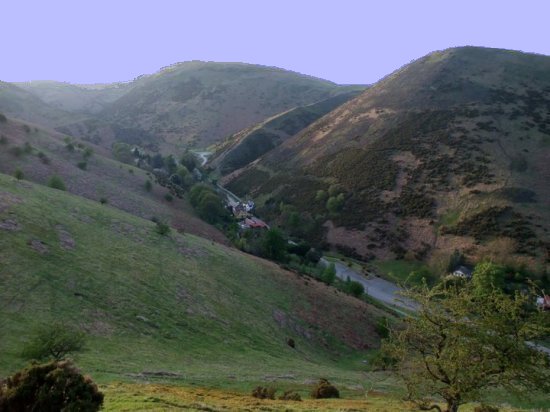
Driving towards Pole Bank

I have only known Jane for a few months but I quickly discovered that some of her family had been involved with amateur radio over the years and she too had a keen interest. She is currently waiting to take her Foundation Licence exam. Jane has been with me on several of my hilltopping extravaganzas recently and has even encouraged me to do so. It's nice when your partner shares the same interest. 

The journey was fairly straight-forward, despite a couple of minor hold-ups along the way around the Cannock/Wolverhampton areas. We also couoldn't resist having a quick look around the village of Church Stretton before taking the high road to the Long Mynd. We arrived close to the summit shortly after 6pm (17:00 GMT), with the short remainder of the journey being on foot. It took about ten to fifteen minutes to reach the summit at "Pole Bank", the highest point of the long Mynd. 


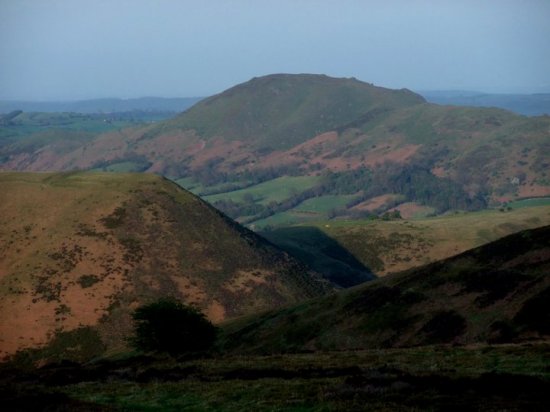
More views from the ascent

My equipment consisted of a Yaesu FT817, an HB9CV, a small tripod, a fibreglass fishing rod and some good old 'gaffa' tape, which usually solves most problems. It took only a few minutes to get everything set up, ready for my first CQ call. In an attempt to set things rolling I telephoned my friend Patrick, G1HEW in South Yorkshire to have the first QSO so I could test the setup. Patrick became my first and furthest contact and thus my first SOTA activation was underway! The first two QSOs took place on the SSB part of 2m. No sooner had I spoken to Patrick I had a nice chat with G4ENZ near Gloucester. 

No further stations were worked on SSB so I quickly moved to the FM part of 2m, changing the polarity of the HB9CV from horizontal to vertical. Calling on 145.500 I quickly established a further three QSOs which took me over the minimum requirements for my first SOTA activation. 

The exercise took less than an hour in total and we would have stayed to work more stations but the weather was beginning to get the better of us. Although we were both well wrapped up, it would have been wise to carry an extra layer of clothing. It's surprising how different the weather feels when you are in an exposed location up in the hills. You can easily knock three to five degrees centigrade off the temperature compared to lower altitudes a few hundred feet below. Those winds really penetrate. 

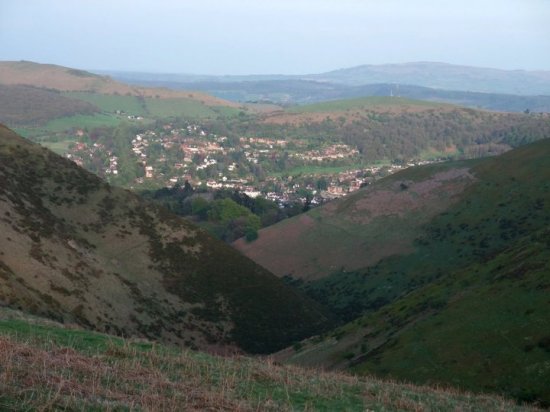
Church Stretton, seen from half way up the ascent to the Long Mynd

After taking down the aerial it was time to walk back down the hill towards the car. Then the short drive into the village allowed the opportunity to take a few photograph. We ended our day driving a little further afield into North Wales for the evening. 

The whole experience was most enjoyable and we are looking forward to another activation in the near future. 

As expected, our trial run taught us a few things: Firstly, we could do with taking some gloves next time; Also some method of guying the makeshift mast would have been useful. 

Here is the brief log from our excursion. This log also appears on the SOTA website 

  04/05/10    17:15z    G1HEW     144MHz    SSB    My first SOTA activation!
  04/05/10    17:20z    G4ENZ       144MHz    SSB
  04/05/10    17:32z    2E0OWH/M    144MHz    FM
  04/05/10    17:36z    G7OMN/M     144MHz    FM
  04/05/10    17:42z    G3ZKN       144MHz    FM
  
73. 

John G1VVP & Jane. 

Tuesday, 14 July 2009

Troposcatter Experiment - Conclusion

I carried further hilltop listening experiments yesterday evening, paying attention to troposcatter at different moorland locations in Derbyshire, using the Sony XDR-F1HD and a Triax FM5, mounted horizontally at 15ft agl. (This was Band 2 FM reception) 

Yesterday evening, I compared Middleton Top with Bonsall Moor, driving quickly between the two locations to make comparisons. Both locations are close to Matlock in Derbyshire and are neighbouring hills, separated by only only a few miles. The Bonsall Moor location is approximately 150 feet higher asl than Middleton Top. (Recent trips have also included Alport Heights, Eyam Moor, Taddington Moor and Beeley Moor) 


2m HB9CV at Bonsall Moor

As is already known, Middleton Top offers a good take-off from all points east through south-west and is surrounded by higher hills which run from the NW through to the NE. These provide a good blocking effect to semi-local stations from the north. The same shielding does not exist at Bonsall Moor, which only has useful blocking to the west where the summit rises to 1250ft asl, so I did not expect to experience almost identical reception at this more-exposed location, yet these two local high spots bore many similarities. A good example would be Hallam FM on 103.4 to the north-east which was very low in strength at both locations, thus allowing excellent reception of Heart Milton Keynes 103.3 - particularly at Bonsall Moor. Local Trent FM 96.5 and Mansfield 103.2 were also weaker than expected. Reception of BBC R Cambridgeshire 95.7 was perfect, as was Norfolk 94.4. I was even able to null local pest BBC R Nottingham on 95.5 at Bonsall Moor, though nothing else was heard due to conditions being flat. 

Troposcatter next: Middleton Top had several French transmitters coming through, including Troyes 91.4 and Bourges 91.8. Only two German stations were noted at Middleton Top: HR3 Sackpfeife 87.6 and SR1 Gottelborner Hohe 88.0. While at Bonsall Moor, Troyes and Bourges were much weaker and many more German transmitters were audible, including Bremen, Aurich, Nordhelle, Langenberg, Aachen, Koblenz, Bonn and Munster. London pirates are also more abundant on Bonsall Moor, so this makes a good all-round location for band 2 FM DX. 

There are two reasons for my recent trips: 1. To determine how high I need to be in order to experience good troposcatter reception; 2. To find a location closer to home which equals the Axe Edge for troposcatter reception. So far, nothing has equalled the Axe Edge for its reliable troposcatter reception of French, Dutch and German transmitters. London pirates are better received at the Axe Edge too. Maybe the reason is the height of the Axe Edge receiving location at approximately 1700ft asl. The higher parts of the Axe Edge also provide useful blocking effects to some of the nearer transmitters too while favouring reception from north-east to south. 

All locations I have tried recently have equally good take-offs to the east through south yet the Axe Edge is the clear winner when it comes to superior continental troposcatter reception. Interestingly, my home location also has an unobstructed 'view' to the east, highlighted by good, daily reception of stations in the east and south-east of England, yet I struggle to hear troposcatter reception of the kind experienced in Derbyshire. The extra height asl of the Derbyshire hills clearly makes the difference. 

Good DX! 

John 

Friday, 10 July 2009

Eyam Moor DX Trip


Looking east to Grindleford from Sir William Hill

I drove to Eyam Moor yesterday afternoon and set up a Triax FM5 close to the summit of Sir William Hill (1407ft asl) for a spot of broadcast FM DXing. I was hoping the summit might have provided more in the way of shielding to the SW-W-NW-N but many stations still got over the hill with very strong signals thus blocking many frequencies. Winds were strong so I could only get the mast up to 12 feet agl. 

All stations below were weak and very choppy, typical of troposcatter but all peaked to noise free levels at times. 

  87.6 HR3, Sackpfeife
  87.6 NDR2, Hamburg
  87.9 NDR Info, Heide
  88.0 SR1, Gottelborner Hohe
  88.0 WDR5, Bonn
  88.0 NOS2, Smilde
  88.7 France Musique, Lille
  89.2 France Musique, Reims
  89.4 France Musique, Boulogne
  92.8 RTBF Musiq'3, Profondeville
  93.8 Bremen Eins, Bremen
  94.0 SWR2, Koblenz
  94.0 France Culture, Rouen
  98.0 France Culture, Lille
  98.1 WDR3, Nordhelle
  98.1 NDR2, Aurich
  99.1 RTBF Classic 21, Anderlues
  99.2 WDR2, Langenberg
  99.2 NDR Kultur, Hamburg
100.0 WDR4, Munster
100.4 WDR2, Bonn
100.8 Bremen Vier, Bremerhaven
100.8 WDR2, Aachen 

Equipment used: Sony XDR-F1HD & Triax FM5 at aproximately 12ft agl. 

Some more photos of the countryside around Eyam Moor: 


Tuesday, 7 July 2009

6m Aerial Debate On Skywaves

Over the last few days I have been wondering if my simple 3 element 6m beam is up to scratch for working the more exotic, distant DX. My curiosity had me posting to the QRZ and Skwyaves forums for feedback. Unfortunately, my request for help on the Skywaves forum developed into a heated debate, followed by arguments in which I admit I became rather 'verbal'. Those who know me appreciate the fact that I speak my mind. I try to do it tactfully. If you feel strongly about something then you are sometimes willing to go a step further and sate your feelings in no uncertain terms. I admit, I can be an argumentative sod at times and this does not do me any favours, but why? People should be honest.

So what was it all about? Well, like many amateurs and radio enthusiasts, I am restricted for space at my QTH and I could only consider a simple three element beam for my first season on 6m and, as we know, 6m aerials are on the large side. I have a small garden and there are already various other aerials on my roof on rotators and on the garden. I did not wish to further annoy the neighbours by erecting yet another 'eyesore'. There is, however, a more important reason why I opted for such a simple aerial: I would have less chance of missing exotic DX if it came in on the side or back of the beam> Too much directivity can work against you. 

The telescopic mast arrangment on the garden allows my rather heavy Sandpiper 6m beam to rise to 20ft above the ground before any major swaying develops. Any taller and I would need to use guy ropes - something I wanted to avoid. So, before we get to the arguments, I accept that I have a very simple setup for 6m, but one which has proved to be more than capable of working European E skip at good signal levels during the summer months. 

Already this season, I have worked stations as far as the Canary Islands and Turkey, with my 100W signal often breaking through heavy pile-ups. I have had many QSOs with the majority of European countries, yet I have so far failed to work transatlantic DX, despite having heard heard stations from the USA, Canada, Puerto Rico and the Dominican Republic. These have been heard up to S5 signal strength at times. Theoretically, if I can hear somebody, they should be able to hear me, however, it is never that simple due to a number of reasons: Stations using differing transmitter powers; Differing aerial systems; Pile-ups and QRM at the distant end, etc. The so-called "big guns" may indeed have a better chance of working exotic DX over somebody such as myself with a relatively simple beam which is not even above the height of the rooftops. But as most of the DX world will confirm, there is always a degree of chance in these situations and 'being in the right place at the right time' counts for a lot. 

If an 'exotic DX' station is active, the whole world comes out of the woodwork. This presents another drawback: I suddenly find myself in the middle of a vast sea of stations, all calling simultaneously in an attempt to be heard, thus further reducing my own chances. It's also probable that most of those stations will be suffering the same congestion, but throw in QSB and DX windows begin to open. Even the 'big guns' will fade and it could be that my signal will peak at that moment. This can create a balance and give all stations an equal playing field. Suddenly you realise that all things might just be possible.

Still there is a lack of TA (transatlantic) here. I seem to be hearing fewer TA stations than some others, but this could simply be because of conditions not favouring my location. Maybe I have been in the wrong place or at the wrong time. But my lack of TA success got me thinking: 

I began to wonder if my close proximity to the hills of the Peak District was blocking TA signals. I looked at the angles involved. The land starts to rise from approximately seven or eight miles to my west and quickly rises to more than 1200ft asl. Add a few more miles and the land approaches 2000 feet. So if my aerial is to 'see' above the nearer parts of the Peak District, it needs to be angled about half a degree skyward. Such a small angle is not even worth considering, so maybe the Peak District might not be so close as to cause a blocking effect. 

Next, I needed to look at whether 6m TA reception is received via a low angled single duct of E layer propagation or if it comes via high angled multiple hops, thus changing the angle of arrival. If the angle is high then I would need to point my beam more towards the sky. There has been some debate about this. As you will see, my concern now was that, if a single hop 'duct' was the only way of working 6m TA, the angle of arrival might actually be lower than my nearby horizon, so maybe the Peak District could be the problem. Time to get a few opinions. 

Firstly, I wrote to QRZ.com, expecting to be shot down in flames because of my simple aerial setup. Some radio amateurs adopt a very elitist attitude. Instead, I was pleasantly surprised. The replies I got were very helpful indeed and a number of relevant issues were politely discussed. However, my post to Skywaves was met with a completely different response, largely from a particular Australian member. What rather annoyed me with a couple of the replies was that my 6m 3 element beam was simply not good enough and that I should not expect to work exotic DX of any kind. I was a little perturbed (to put it mildly) by the strength of one response in particular and found it unreasonable that the relevant facts were stated in such a 'black and white' nature. The opinions seemed to rule out all elements of chance too. The big problem for me was that such blunt attitudes were of no help to newcomers to the DX hobby. One reply offered no encouragement at all and that the comments were totally dismissive. (Anger now building) I am not prepared to allow somebody to dictate to me what I can and cannot receive, especially when they were on the opposite side of the globe. Thankfully, the majority of the replies included common sense and favoured the elements of chance, but regretably, these supportive messages were received 'off-group'. Some members of the Skywaves forum actually telephoned me to express their anger at the dismissiveness of the poster. 

Further negative posts were made to the Skywaves forum by two other radio amateurs, one of whom had just joined and was stating that none of the DXers in Skywaves were 'real DXers' because of the inferior equipment they used. War practically broke out (and, yes, I know I was one of those hurling the missiles, but I find it difficult to keep quiet when innocent people are getting hurt). The Skywaves moderators had to intervene to calm things down. 

I get very angry when people take a 'holier than thou' attitude and make sweeping statements, dissmissing those whom they feel are beneath them. This is a competitive hobby for some though. I know that some DXers and radio amateurs get very upset if they have miss out on exotic DX. Perhaps it is understandable to a degree if they have invested large amounts of time and money to improve their setup, so it must be soul destroying for those elite DXers with their lattice towers and stacked arrays when they discover that a DXer down the road with nothing more than a bucket and a piece of wet string has been pulling in far more than they have. That's life! Conditions are a natural phenomena over which we have no control, so these things will happen, but is it worth losing sleep over and me writing an essay about it? Of course not, but I wanted to reflect over this and offer some balance now things have calmed down. DXers and radio amateurs frequently achieve something that they thought to be impossible when using relatively simple aerial systems. I am not aware of any law which states that one "can" or "cannot receive X just because your aerial is not good enough", as two of the Skywaves members were stating. A law entitled "Being in the right place at the right time" would make far more sense. 

Time and time again, history has shown that, while we all have our different receivers and aerials, they often have no bearing on the DX we actually receive. Conditions will change and DXers will indeed find that they are 'in the right place and at the right time'. I fully accept that superior setups offer advantages, they do not govern the laws of propagation. Much stunning DX has been worked or received over the years on very simple equipment. We even have groups for those interested in 'QRP' or 'Ultralight' which present more challenges to the DXer. Many of these people go on to achieve 'as much as' and sometimes 'more' than DXers with relatively superiior equipment. It could also be because of the skill of the operator and their dogged determination, plus a little bit of 'luck'. 

I believe I 'will' work TA DX on 6m, but I also accept I may need more luck than some and I need to be on my guard to achieve my goal. 

UPDATE:
Well, it happened! On the 31st of May 2010 I worked a 6m station in the US Virgin Islands and two stations in Puerto Rico. These are my first two transatlantic DX QSOs on 6m. Surprisingly, the QSOs were relatively easy. I simply responded to their calls and 5/5 to 5/9 signal reports were exchanged, so there wasn't even a struggle! 


It's a hobby! Share and enjoy! 

Thursday, 25 June 2009

Noctilucent Clouds

There has been some discussion about NLCs being seen in the night sky recently. Also known as 'noctilucent clouds'. These are the highest clouds in the sky and are typically seen in our night sky in latitudes of 50 - 65 degrees. Noctilucent means 'night shining'. 


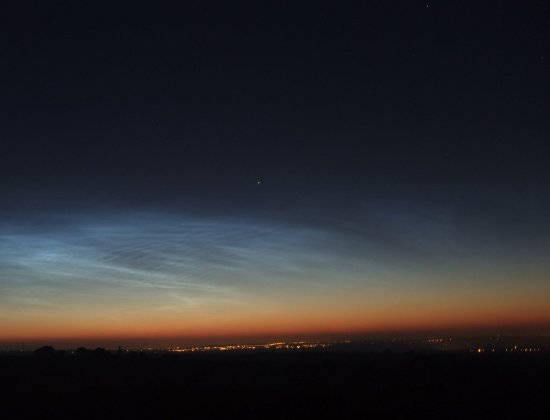
Noctilucent Clouds - Zoomed To Horizon

NLCs are colourless or bluish-white clouds and can be skein-like, rich with undulations and corrugations, knots and streaks, clawing upwards into the night sky, or at other times they can lie close to the horizon as a featureless band. 

NLCs are seasonal and can be seen between mid May and mid August in the northern hemisphere, mid-November to mid-february in the Southern Hemisphere). They are never visible in daylight. Wait until an hour after sunset when twilight has deepened. The sun should be 6 - 16 degrees below the horizon, enough to darken the sky but not so low that the NLCs are not still in sunlight. Firstly, search low in the sky towards the direction of the sun beneath the horizon, northwest before midnight, northeast afterwards. 

Noctilucent Clouds - Distance

Binoculars can help in distinguishing them from lower cirrus clouds. They appear sharper under magnification. 

NLCs are can sometimes visible further south, having been sighted in Europe as far south as Austria, Hungary, Italy and southern Germany. In the USA they have been seen in Utah and Colorado. 

Luckily for me, I was driving home across the Peak District on the morning of June 24th around local 1am. This is the darkest time of the night though the night sky never gets totally dark on the distant northern horizon at this time of year. 

The photos on this page show views across Chesterfield, showing the NLC clouds on the northern horizon. These were taken on Beeley Moor, above the villages of Upper Loads and Holymoorside. This part of the moor is approximately 1100 feet above sea level. 

The camera used was a small black one! ;0) 

Thursday, 4 June 2009

Sizewell DX Trip No.22

This was not supposed to be a 'radio trip' this time, but a short camping break with my wife (a mention of the word "radio" would result in my castration). She had not been to Sizewell before so I was looking forward to showing her what a beautiful place it was (apart from the nuclear power station of course). This also gave me the opportunity to explore the area more fully myself as I usually just do radio things on the campsite and never venture anywhere else. 


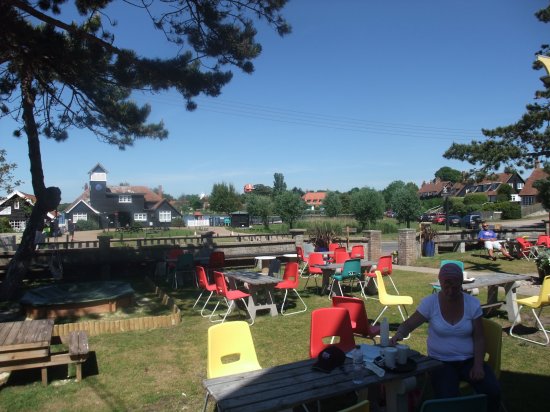
The nearby village of Thorpeness

Kim, our Welsh border collie, came with us too. We walked miles each day, exploring the Suffolk Coast Path, nearby villages and areas of natural heath land. My wife was so impressed with the area that she did not want to go home! In fact we extended our visit for an extra day and were even considering staying on through to the following weekend, but the beautiful weather was not going to hold out, so we have planned to visit again later in the summer. 

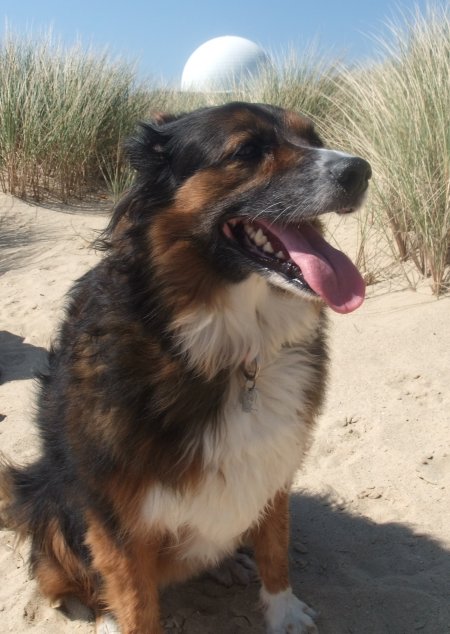
Kim, wearing Sizewell nuclear power station

I managed to do a little bit of radio listening even so and took along a few small items. Namely, the Sony XDR-F1HD, an Icom IC7000, the 'Faulkner FM loop antenna' and an HB9CV for 2m operation. FM 'broadcast' radio sessions were restricted to early mornings and late evenings as I did not want this to take over. I also managed some early evening sessions on 2m in an attempt to activate the 'WAB' square TM46, where we were staying, but I failed miserably. I did not speak to a single UK radio ham on 2m but managed to work several continental stations with the greatest of ease (5&9+10 signals). 

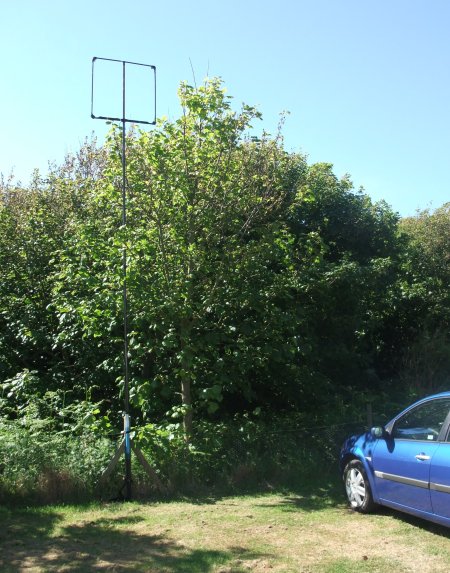
The famous 'Faulkner FM Loop Antenna'

It was nice to add several new additions to the cumulative Suffolk FM log though. The regular continental signals were still coming in with huge signals. You will note that I have included some RDS data with my loggings. These do not often appear because of co-channel continental activity. 

Our visit coincided with a nice spell of tropospheric activity, which was completely unexpected. This lasted from late evening on June 1st and continued throughout the 2nd and up to the midday period on June 3rd. The tropospheric conditions began with good signals from Germany from late afternoon on June 1st. By the afternoon of June 2nd the conditions had moved closer to home and Belgium was powering through. Local stations were heard noise- free, particularly above 105MHz. Signals from the continent were mostly at 'three lights' on the XDR F1HD - 36dB+! 

The Log:  New additions are indicated by an asterisk 
  87.6 02-06-09 BEL Nostalgie, Oostende (formerly R Mango)
  87.7 02-06-09 D WDR 5, Bad Oeynhausen (100W) *
  87.8 02-06-09 D WRD 2, Schwerte _WDR_2__
  88.0 02-06-09 D WDR 5, Bonn WDR_____
  88.1 02-06-09 BEL Nostalgie, Brugge (formerly R Mango)
  88.3 03-06-09 BEL R MNM, Brussel (formerly VRT Donna)
  88.9 02-06-09 D NDR Info, Lingen (200W)
  89.0 02-06-09 HOL R West, Den Haag (100W)
  89.0 03-06-09 BEL R MNM, Schoten (formerly VRT Donna)
  89.3 02-06-09 HOL R West, Rotterdam
  89.4 02-06-09 D NE-WS 89.4, Dusseldorf
  91.1 02-06-09 HOL Slam FM, Markelo or Hilversum
  91.1 03-06-09 F France Inter, Villers-Cotterets (02)
  91.5 02-06-09 BEL Unidentified Brussels station with pops (Dutch language)
  91.5 02-06-09 HOL BNR, 3 transmitters
  92.1 02-06-09 D NDR 2, Torfhaus
  92.2 03-06-09 BEL Joe FM, Dendermonde (formerly 4FM)
  92.4 02-06-09 D SWR 1, Linz SWR1_RP_
  93.2 02-06-09 D SWR 2, Haardtkopf
  94.6 02-06-09 D MDR 1, Brocken MDR_S-AN
  94.8 02-06-09 D SWR 3, Linz __SWR3__
  94.9 02-06-09 D R Herford, Herford (500W) *
  95.0 02-06-09 D NDR Info, Bremen-Walle (1kW)
  96.7 02-06-09 BEL Q Music, Mechelen *
  98.5 02-06-09 D NDR 2, Schwerin
100.2 02-06-09 D R SH, Bungsberg
100.6 02-06-09 D R FFN, Rosengarten
101.0 02-06-09 BEL Nostalgie, Oostvleteren *
102.0 02-06-09 BEL Nostalgie, Schoten
102.2 02-06-09 D DLF, presume Hohbeck but Itzehoe also listed
102.5 02-06-09 D HR 4, Gr. Feldberg
102.9 02-06-09 D RPR 1, Bad Marienberg
103.5 02-06-09 D RPR 1, Ahrweiler
104.0 02-06-09 D Big FM, Koblenz
104.1 02-06-09 BEL Joe FM (formerly 4FM), Egem
104.7 02-06-09 HOL 100%NL, Amsterdam (40W) *
104.8 02-06-09 BEL R Extra Gold, Koksijde (316W) *
104.9 02-06-09 BEL R Extra Gold, Oostkamp (100W)
105.0 02-06-09 BEL R 'T Visschertje, Oostende (23W)
105.1 02-06-09 BEL R Paradijs, Knokke-Heist (100W)
105.2 02-06-09 D R Berg, Lindlar
105.3 02-06-09 BEL Be One, Brugge (100W)
105.5 02-06-09 BEL Crazy FM, Staden (100W)
105.8 02-06-09 D R Erft, Koln
105.9 02-06-09 D R FFH, Gr. Feldberg _F_F_H__
106.0 02-06-09 BEL Club FM, Brugge (100w) (formerly Cool FM)
106.2 02-06-09 BEL Club FM, Knokke-Heist (100W)
106.3 02-06-09 D SWR 4, Bad Marienberg SWR_4_K (partial RDS)
106.3 02-06-09 BEL Mint FM, Tubize *
106.6 02-06-09 D Antenne Brandenburg, Pritzwalk
106.8 02-06-09 D R FFH, Driedorf
106.8 02-06-09 BEL R Extra Gold, Torhout (100W) __T_--__ (partial RDS)
106.9 02-06-09 D R Euskirchen, Schleiden
107.1 02-06-09 BEL Topradio, probably Oostende (100W)
107.2 02-06-09 BEL R Bingo, Roeselare (100W)
107.3 02-06-09 BEL VBRO, Diksmuide (100W)
107.4 02-06-09 D R Wuppertal, Wuppertal R_WUPPER
107.4 02-06-09 BEL Be One, Oostende (100W)
107.5 02-06-09 D BB R, Berlin *
107.6 02-06-09 D R KW, Wesel
107.6 02-06-09 BEL Costa FM, De Panne (100W)
107.7 02-06-09 BEL Crazy FM, Oostkamp (87W) *

A couple of observations to finish with: 
1. It is becoming increasingly difficult to keep track of stations in Holland and Belgium due to network changes. 
2. Once the tropospheric conditions had subsided, the FM band returned to a very flat state. Possibly more so than usual. But the time of year probably had something to do with this. 

It takes months for the ground and sea temperatures to build after the winter months. Once the tropospheric DX had subsided this time, conditions on the FM broadcast band dropped off to a very poor level: The car radio produced very little in the way of continental DX whereas it is usually teeming with Dutch and french stations but, even with the XDR-RF1HD and loop antenna, the conditions were noticably the poorest I have personally experienced there. Temperatures got quite cold once the sun had gone down and the air had a distinct chill. 

There should still be plenty of continental stations to be heard if you use a good beam and a reasonably tall mast though, even if conditions are relatively poor, plus conditions are constantly changing wildly there. 

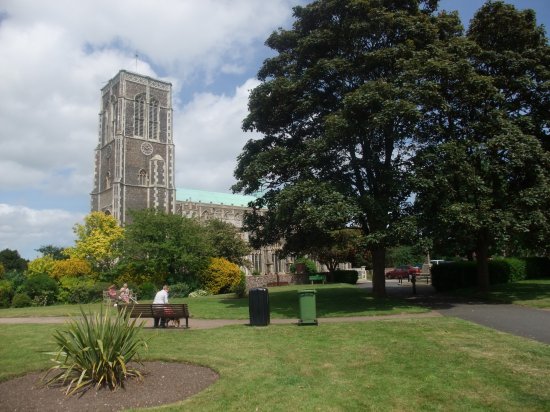
St Edmund's Church, Southwold

I think it is important to consider that it takes the whole summer season for ground and sea temperatures to build up in order to provide a useful level of propagation on the FM band. Conditions should be at their best from mid/late summer right through to January or possibly February. I once visited Sizewell on a freezing cold day in mid December and the FM band was alive with continental DX on just the car radio. So a word of warning if you are intending to visit this coastline purely for DXing purposes, you would probably benefit by waiting until July at the earliest before your visit, or just wait for a good spell of continental tropo. I know one experienced DXer who visited the Suffolk coast at Aldeburgh in March/April and heard nothing from the continent whatsoever. 


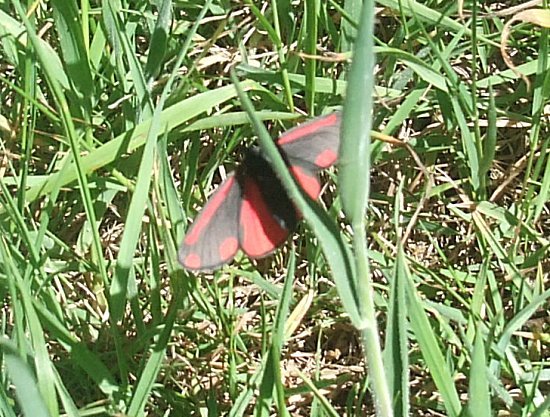
Some of the local wildlife

Just a point about the crazy weather in this country to finish off with. While we were away the temperatures reached 26 degrees centigrade. This was far warmer than was initially predicted by the Met Orifice. The high pressure was not forecast before we left home either. The weather remained dry and mostly sunny for our entire trip. But since returning home, the period between Friday 5th and Sunday 7th, we have had almost eight inches of rain following torrential rain and thunder storms. Today's temperature (7th) reached the dizzy heights of 7 degrees centigrade while two days ago people in Yorkshire were able to build snowmen. I wondered how this could be, but then I remembered - this IS the 'British' summer. I doubt you'd get this anywhere else! 

Good DX! 

John
Sony XDR-F1HD
FM Loop Antenna (Cubical Quad)
20 foot telescopic mast 

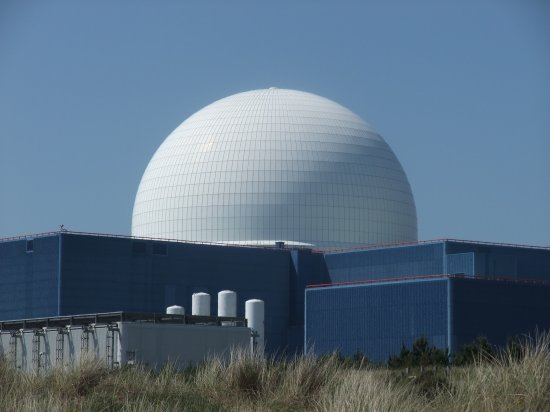
Sizewell nuclear power station